

Acne is one of the most common and frustrating skin conditions that teenagers face during puberty. While genetics and hormonal fluctuations play major roles, modern research highlights a powerful but often overlooked factor — diet. What you eat directly influences your skin’s health, oil balance, and inflammation levels.
Among various dietary patterns, the whole food diet has gained remarkable attention as a natural, science-backed approach to improving skin clarity and reducing acne severity.
This article explores how a whole food diet for teenagers with acne problems can transform skin health, supported by scientific evidence, nutritional principles, and practical meal guidance.
The Diet–Acne Connection: Why It Deserves Attention
Many teenagers rely solely on topical creams, medications, or dermatological treatments to fight acne — yet still struggle with recurring breakouts. Science now reveals that acne is not just a skin-deep issue; it reflects systemic processes involving hormones, inflammation, oxidative stress, and gut health — all of which are directly influenced by diet.
Recent studies demonstrate strong links between certain dietary patterns and acne prevalence:
- High-glycemic diets (rich in refined carbs and sugars) can increase insulin and IGF-1 levels, triggering excess sebum production and inflammation (Scientific Source – ScienceDirect).
- Dairy intake, especially skim milk, has been associated with higher acne risk in adolescents (MDPI Review).
- Anti-inflammatory foods, including omega-3s and antioxidants, have shown benefits in acne management (Medical News Today).
- Mediterranean-style diets, which emphasize whole foods, may protect against acne by reducing systemic inflammation (BMC Nutrition Study).
Clearly, a whole food diet for teenagers with acne problems offers more than just general health benefits — it may be the missing link to clear, resilient skin.
What Is a Whole Food Diet?
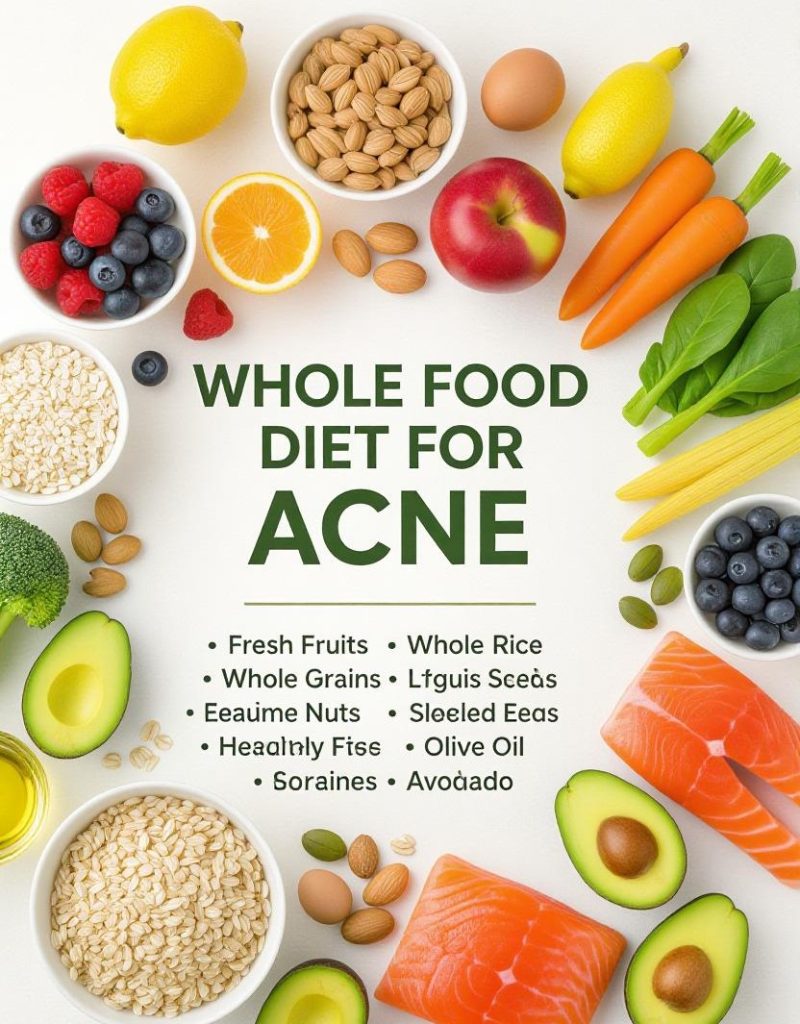
A whole food diet focuses on eating foods in their most natural, minimally processed form — retaining their full spectrum of nutrients, fiber, and antioxidants.
Whole foods include:
- Fresh fruits and vegetables
- Whole grains (brown rice, quinoa, oats, barley, millets)
- Legumes and lentils
- Nuts and seeds
- Unprocessed proteins (fish, eggs, tofu, chicken, beans)
- Healthy fats (olive oil, flaxseed, avocado)
The diet minimizes refined flour, sugar, processed snacks, and synthetic additives.
For teenagers dealing with acne, this diet helps by:
1. Balancing Blood Sugar and Hormones
Whole carbohydrates digest slowly, preventing sharp blood sugar spikes. Stable insulin levels help control IGF-1 and androgen hormones, both of which stimulate sebum (oil) production and inflammation (PMC Study).
2. Reducing Inflammation
Processed foods often contain trans fats, refined sugar, and artificial ingredients that trigger inflammatory cytokines. Whole foods, rich in antioxidants and omega-3s, counteract this process naturally.
3. Improving Gut Health
A fiber-rich diet nourishes beneficial gut bacteria, supporting better digestion and immune balance. A healthy gut-skin axis has been shown to reduce systemic inflammation, benefiting acne-prone skin.
4. Providing Essential Micronutrients
Whole foods are abundant in vitamins A, C, E, zinc, and selenium — crucial for healing, antioxidant defense, and collagen support.
5. Sustainable Lifestyle
Unlike fad diets, the whole food approach is sustainable, balanced, and supports long-term wellbeing — ideal for teenagers’ growth and skin health.
Practical Whole Food Diet Plan for Teenagers with Acne
Below is a simple, evidence-based daily structure that teens can realistically follow without feeling deprived.
| Meal | Objective | Sample Options |
|---|---|---|
| Breakfast | Kickstart metabolism with protein + fiber + healthy fats | Oatmeal with berries & nuts, vegetable omelet with whole-grain toast, or quinoa porridge with dates & almond milk |
| Lunch | Balanced mix of vegetables, protein & whole carbs | Brown rice + lentils + vegetables; quinoa salad with chickpeas, greens, and olive oil |
| Snack | Light, nutrient-dense options | Mixed nuts, hummus with cucumber/carrot sticks, fruit with nut butter |
| Dinner | Light and easy to digest | Stir-fried vegetables with millet or brown rice; lentil soup with salad |
| Hydration | Maintain 2–3 liters of water daily | Include green tea, lemon water, or herbal teas (unsweetened) |
Tip: Acne improvement takes consistency — usually 8–12 weeks of dietary adherence are needed to notice significant changes.
Foods to Limit or Avoid
To maximize the impact of a whole food diet for acne, certain triggers should be minimized:
- Refined sugar & high-glycemic foods: pastries, cakes, candy, sodas (Medical News Today)
- Refined carbs: white bread, pasta, bakery items (PMC Research)
- Dairy products: especially skim milk and sugary yogurt (PubMed Study)
- Fried or processed foods: chips, fast food, frozen snacks (PMC Study)
- High-sodium and trans-fat-rich foods
Key Nutrients That Support Clear Skin
| Nutrient | Whole Food Sources | Function for Acne / Skin |
|---|---|---|
| Zinc | Pumpkin seeds, lentils, chickpeas, almonds, cashews | Reduces inflammation, regulates oil production, supports wound healing |
| Omega-3 Fatty Acids | Salmon, mackerel, flaxseed, chia seeds, walnuts | Anti-inflammatory, improves skin barrier function |
| Vitamins A, C, E | Carrots, spinach, bell peppers, berries, sunflower seeds | Protects against oxidative stress, aids collagen production |
| Fiber | Whole grains, legumes, fruits, vegetables | Balances blood sugar, supports gut health |
| Probiotics | Non-dairy yogurt, kefir, sauerkraut, kimchi | Improves gut microbiome, reduces systemic inflammation |
Supplements can help fill nutritional gaps but should always be taken under professional supervision.
Lifestyle Factors That Enhance Results
Diet works best when supported by other healthy habits:
- Sleep: Aim for 7–9 hours of uninterrupted sleep — poor rest increases cortisol and inflammation.
- Stress management: Meditation, breathing exercises, or light workouts can balance stress hormones.
- Exercise: Regular movement improves circulation and detoxification.
- Gentle skincare: Use non-comedogenic cleansers and avoid harsh chemicals.
- Sun protection: Apply broad-spectrum SPF daily to protect healing skin.
- Track your diet: Keeping a food diary helps identify potential triggers.
Limitations and Considerations
While a whole food diet can greatly improve acne outcomes, it’s not a miracle cure. It should be seen as a supportive therapy, not a replacement for medical treatment.
- Individual responses vary. What triggers acne in one person may not in another.
- Underlying causes like hormones, genetics, or stress still play roles.
- Extreme restriction is unsafe for growing teens — balance is key.
- Supplements should only be used if clinically needed.
- Results take time. Skin cycles average 6–8 weeks; patience is crucial.
Case Example (Hypothetical)
Let’s consider Emma, a 16-year-old struggling with moderate acne. She adopted a whole food diet for 3 months:
- Replaced white bread and pasta with brown rice and oats
- Added salmon twice weekly and daily salads
- Stopped sugary sodas and processed snacks
- Increased water intake and sleep routine
Within 10 weeks, she observed fewer breakouts, reduced redness, and smoother skin texture. Her dermatologist noted improved skin hydration and decreased inflammation.
This case demonstrates how nutrition can be a powerful adjunct to conventional acne care.
Suggested Internal & Affiliate Links
You can integrate links within the content naturally for SEO and monetization:
Internal Links (Example):
Learn more about balanced nutrition in our guide on Teen Nutrition Tips.
Affiliate Links (Example):
Complement your diet with a trusted, third-party tested Omega-3 Supplement or Probiotic Yogurt to support gut and skin health.
(Replace with your actual links or product pages.)
Conclusion
The whole food diet for teenagers with acne problems offers a sustainable, evidence-based, and natural way to achieve clearer skin from within. By stabilizing hormones, reducing inflammation, and nourishing the body with essential nutrients, it supports both short-term results and long-term skin health.
In summary:
- Controls blood sugar and hormonal fluctuations
- Reduces inflammation and oxidative stress
- Improves gut and immune health
- Provides essential micronutrients for healing
- Encourages a lifelong healthy relationship with food
If you’re a parent or teen seeking lasting acne relief, consider starting with small, sustainable whole food swaps — because clear skin truly begins in the kitchen.