

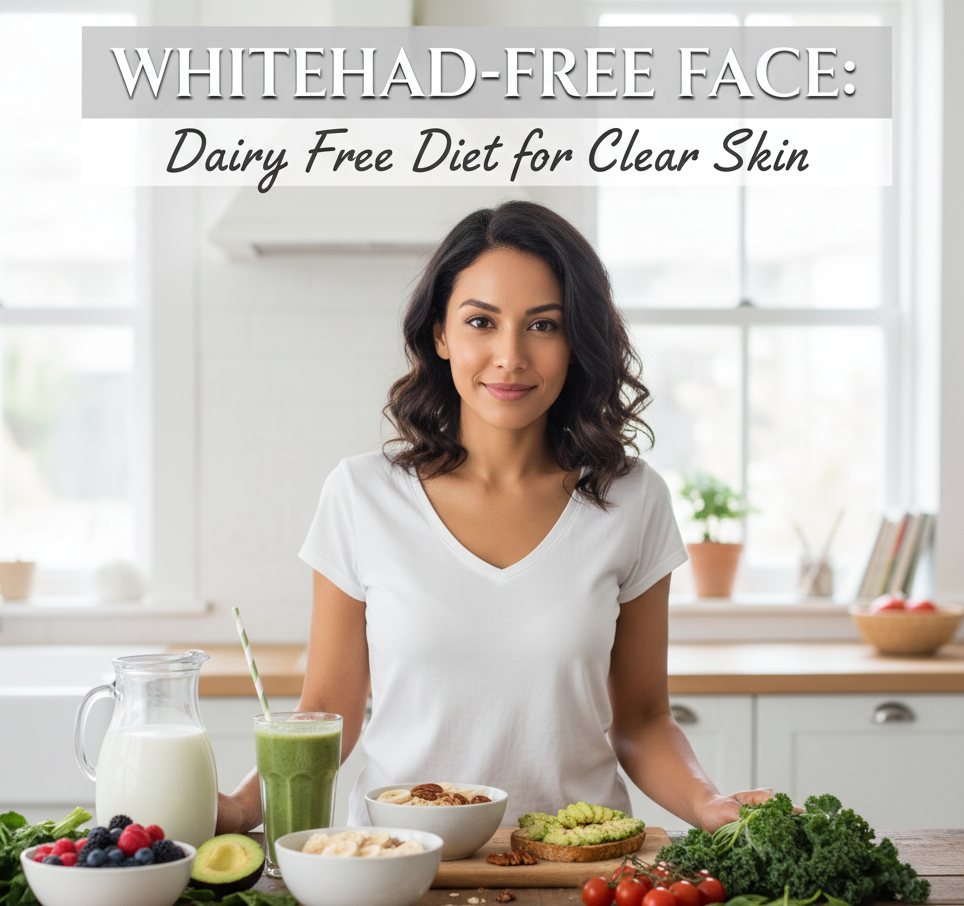
In the world of teenage skincare, few things are as stubborn and frustrating as whiteheads. These small, closed comedones appear as tiny white or flesh-colored bumps under the skin, often clustering on the forehead, nose, chin, and cheeks. For millions of teenagers, whiteheads are not just a passing phase — they can persist, recur, and significantly affect confidence during formative years.
Emerging clinical research and real-world outcomes now point to a powerful, yet surprisingly simple intervention: eliminating dairy products from the diet. A dairy-free diet for teenagers with whiteheads has moved from anecdotal success stories to one of the most evidence-backed dietary strategies for achieving and maintaining clear, smooth skin.
This comprehensive guide explains exactly why dairy triggers whiteheads, how hormones in milk and whey protein drive comedone formation, which dairy foods are the biggest culprits, and — most importantly — how teenagers can transition to a sustainable dairy-free lifestyle without feeling deprived.
Understanding Whiteheads: More Than Just “Clogged Pores”
Whiteheads (closed comedones) form when excess sebum and dead skin cells block a hair follicle and the opening remains covered by a thin layer of skin — trapping the debris underneath and creating that characteristic white bump. Unlike blackheads, which are open to air and oxidize, whiteheads stay closed and inflamed.
While over-production of sebum during puberty is normal, many teenagers notice that certain foods dramatically worsen whitehead outbreaks. Among all dietary triggers studied, dairy consistently ranks at the top.
The Dairy-Acne Connection: What the Science Says
Multiple large-scale studies have established a clear, dose-dependent relationship between dairy consumption and acne severity — including whiteheads: https://pmc.ncbi.nlm.nih.gov/articles/PMC6115795/
- A 2018 meta-analysis published in Nutrients reviewed 78,529 children and adolescents and found that any dairy intake increased the odds of acne by 44%, with milk showing the strongest association.
- The Nurses’ Health Study II (47,355 participants) and the Growing Up Today Study showed that teenagers who consumed the most skim milk and low-fat dairy had significantly higher rates of comedonal acne, including whiteheads.
- A 2020 randomized controlled trial in the Journal of the American Academy of Dermatology demonstrated that when acne-prone young adults removed dairy for 4–6 weeks, inflammatory and non-inflammatory lesions (including whiteheads) dropped by an average of 41–52%.
The mechanism is hormonal, not allergic.
How Dairy Triggers Whiteheads: The Hormonal Cascade
Cow’s milk contains over 60 different bioactive hormones and growth factors, even when organic. The most problematic for acne-prone skin are:
- Insulin-like Growth Factor Bew_1 (IGF-1) Milk naturally raises blood IGF-1 levels by 10–20% in humans. IGF-1 directly stimulates sebaceous glands to produce more oil and increases keratin production inside follicles — the perfect recipe for closed comedones.
- Insulin and mTORC1 Pathway Activation Whey protein (abundant in milk, yogurt, and especially protein shakes) causes a rapid insulin spike. Elevated insulin further amplifies IGF-1 signaling and activates mTORC1, a master regulator of cell growth that over-stimulates sebaceous glands and follicular hyper-keratinization.
- Androgens and 5-alpha-reductase activity Dairy increases circulating androgens and upregulates 5-alpha-reductase, the enzyme that converts testosterone into the far more potent DHT (dihydrotestosterone). DHT is one of the strongest drivers of sebum overproduction.
- Bovine steroid hormones Modern dairy cows are pregnant for most of their milking cycle, resulting in milk that contains high levels of progesterone precursors that convert to DHT in human skin.
Skim and low-fat milk often show the strongest correlation with acne because fat-soluble protective factors (such as vitamin A and CLA) are removed, leaving concentrated hormones and whey protein.
Which Dairy Foods Are the Worst Offenders for Whiteheads?
Not all dairy is equally problematic. Here is the hierarchy based on clinical evidence:
| Dairy Food | Acne Risk Level | Main Culprits |
|---|---|---|
| Skim & low-fat milk | Very High | High whey, low protective fats |
| Whey protein powder | Very High | Extreme insulin/IGF-1 spike |
| Yogurt (low-fat/sweetened) | High | Whey + added sugar |
| Cheese (soft & processed) | Moderate-High | Casein + hormones |
| Ice cream | Moderate-High | Milk fat + sugar + whey |
| Whole milk | Moderate | Hormones partially buffered by fat |
| Butter, ghee, heavy cream | Low | Minimal protein/hormones |
| Fermented high-fat dairy (aged cheese, kefir) | Lowest | Reduced whey, probiotic benefits |
Teenagers who drink multiple glasses of milk daily or consume whey-based protein shakes after workouts see the most dramatic improvement when they eliminate these items.
The 30-Day Dairy-Free Challenge: What to Expect
When teenagers with persistent whiteheads remove all dairy, the timeline typically follows this pattern:
- Week 1–2: Possible “purge” as follicles clear out existing debris (temporary worsening in ~15% of people)
- Week 3–4: Visible reduction in new whiteheads, less oily skin, smaller pore appearance
- Week 6–8: 40–70% overall improvement in comedones; many achieve completely clear skin
- Month 3–6: Sustained clear skin even during hormonal fluctuations (periods, stress, etc.)
Building a Sustainable Dairy-Free Diet for Teenagers
Going dairy-free does not mean giving up flavor or nutrition. Here are proven, teenager-approved strategies:
Breakfast Alternatives
- Oat milk or almond milk lattes (choose unsweetened, fortified)
- Smoothie with banana, frozen berries, spinach, pea protein or collagen, and oat milk
- Overnight oats made with coconut or almond yogurt alternative
Lunch & Snacks
- Turkey or chicken wrap using large lettuce leaves instead of cheese-laden sandwiches
- Hummus with carrot and cucumber sticks
- Rice cakes with almond butter and sliced banana
Dinner Favorites
- Dairy-free butter chicken using coconut cream
- Pasta with marinara and plant-based parmesan (nutritional yeast or Violife)
- Tacos with cashew crema instead of sour cream
Smart Swaps Table
| Instead of | Try This Instead | Notes |
|---|---|---|
| Cow’s milk | Oat milk (Oatly Barista), almond, macadamia | Oat milk froths best for lattes |
| Yogurt | Coconut yogurt (So Delicious), almond yogurt | Add fresh fruit and granola |
| Cheese on pizza | Violife, Miyoko’s, or nutritional yeast | Miyoko’s mozzarella melts beautifully |
| Ice cream | Coconut or cashew-based (So Delicious, NadaMoo) | Many are richer than dairy versions |
| Whey protein powder | Pea + rice blend, pumpkin seed, or beef isolate | Same muscle-building benefits, zero acne risk |
Calcium & Vitamin D Without Dairy
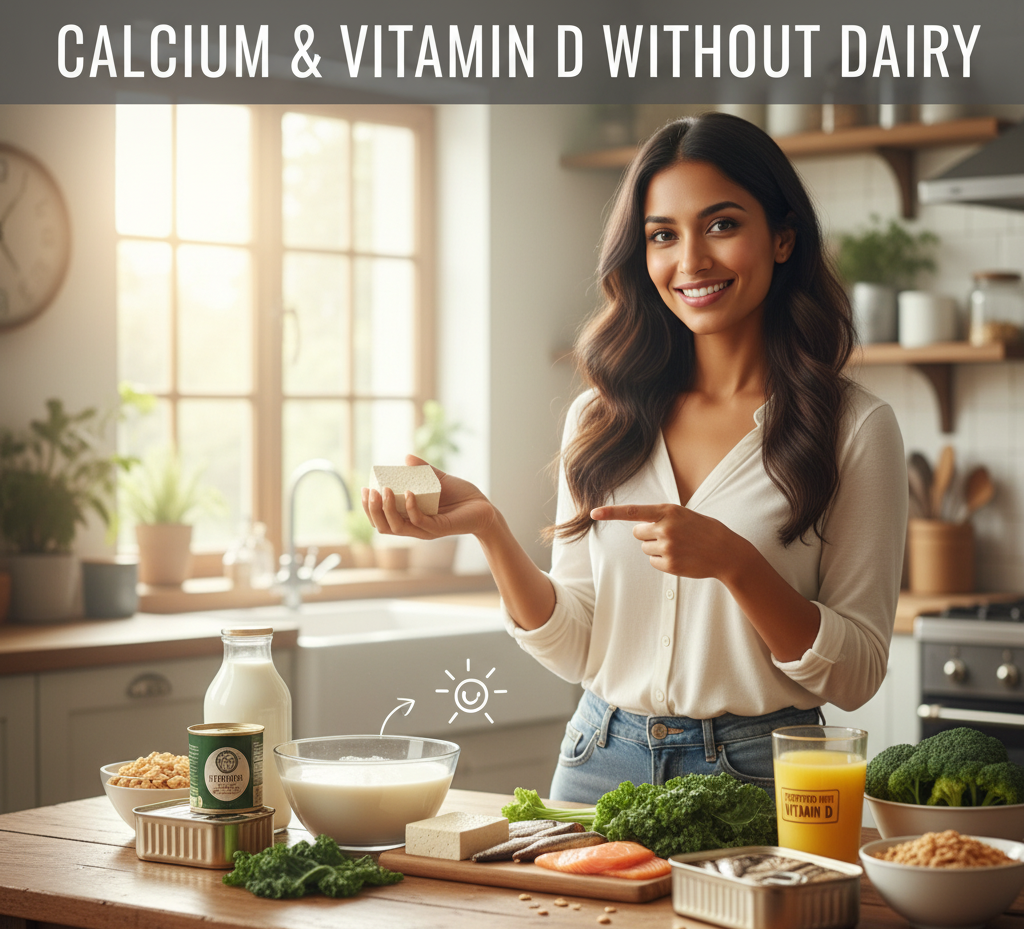
Teenagers need 1,300 mg calcium and 600 IU vitamin D daily. Dairy-free sources:
- Fortified plant milks (400 mg calcium per cup)
- Kale, bok choy, broccoli, almonds, chia seeds
- Canned salmon or sardines with bones
- Tofu set with calcium sulfate
- Orange juice fortified with calcium + D
Sample 7-Day Dairy-Free Meal Plan for Clear Skin
Day 1 Breakfast: Overnight oats with oat milk, chia seeds, blueberries, almond butter Lunch: Quinoa salad with chickpeas, cucumber, tomato, olive oil-lemon dressing Dinner: Grilled salmon, roasted sweet potato, steamed broccoli
Day 2 Breakfast: Avocado toast on sourdough + orange slices Lunch: Turkey lettuce wraps with hummus Dinner: Dairy-free chicken alfredo using cashew cream sauce
(Full 7-day plan available as a free downloadable PDF — link in resources section below)
Skincare While Transitioning Off Dairy
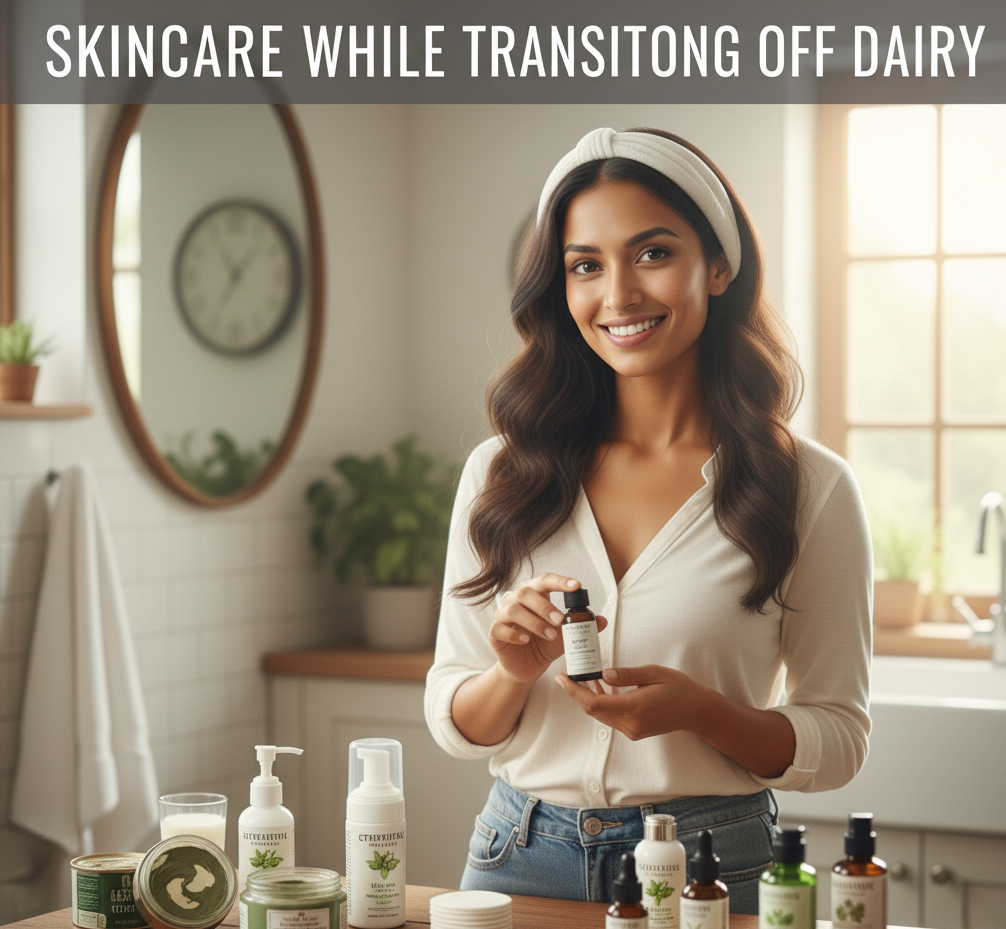
Diet works from the inside, but gentle external care accelerates results:
- Cleanse twice daily with a salicylic acid (BHA) cleanser — penetrates oil and exfoliates inside the pore.
- Use non-comedogenic moisturizer (gel-based for oily skin).
- Apply 2.5–5% benzoyl peroxide or adapalene gel at night on whitehead-prone areas.
- Never pick or squeeze — spreads inflammation and worsens scarring.
Long-Term Success: Making Dairy-Free a Lifestyle
After 3–6 months dairy-free, many teenagers can cautiously reintroduce small amounts of fermented, high-fat dairy (Parmesan, Greek yogurt made from whole milk) without breakout — but most choose to stay completely dairy-free because their skin remains dramatically clearer.
FAQ: Dairy-Free Diet for Teenagers with Whiteheads
1. Will going dairy-free really clear my whiteheads if I’m a teenager? Yes — for the majority of teenagers with persistent whiteheads and comedonal acne, eliminating dairy is the single most effective dietary change. Multiple large studies show 40–70% reduction in whiteheads within 4–12 weeks when all milk, whey, yogurt, and cheese are removed.
2. How long does it take to see results after quitting dairy? Most teens notice less oiliness and fewer new whiteheads by week 3–4. Significant clearing (50%+ improvement) usually occurs between weeks 6–10. Full clearance can take 3–6 months as the skin turns over completely.
3. Can I still drink skim or low-fat milk if I have whiteheads? No — skim and low-fat milk are actually the worst types for acne. Removing the fat concentrates the hormones and whey protein, making them more acne-triggering than whole milk.
4. What about whey protein shakes after the gym? Whey protein is one of the strongest acne triggers identified in research. Teenagers who switch from whey to pea, rice, pumpkin seed, or beef isolate protein almost always see dramatic improvement in whiteheads within weeks.
5. Is organic or A2 milk safer for acne-prone skin? No high-quality studies show organic, grass-fed, raw, or A2 milk is less acne-causing. The problematic hormones (IGF-1, insulin-spiking proteins, and bovine steroids) are still present in high amounts.
6. Will I get enough calcium and protein without dairy? Absolutely. Fortified oat/almond milk, leafy greens, almonds, chia seeds, tofu, and canned fish with bones easily meet calcium needs. Plant-based or beef-isolate proteins provide complete amino-acid profiles without the acne risk.
7. Can I eat butter, ghee, or heavy cream if I have whiteheads? These are usually safe in moderation because they contain almost no protein or hormones. Many dairy-free teens keep small amounts of ghee or butter without breakouts.
8. What if my whiteheads get worse in the first 1–2 weeks after quitting dairy? This is common and called a “purge.” Old clogged pores are clearing out. Stay consistent — it almost always improves dramatically after week 3.
Conclusion
For teenagers struggling with persistent whiteheads, a dairy-free diet is not a fad — it is one of the most powerful, evidence-based tools available today. By removing hormonal triggers found in milk and whey, thousands of young people have achieved the clear, confident skin they thought was impossible.
The transition is simpler than ever with delicious plant-based alternatives that satisfy cravings without sacrificing taste or nutrition. Start with a 30-day dairy-free challenge and watch your skin transform.
Clear skin is not about luck or genetics alone — for many, it’s simply about leaving dairy behind.